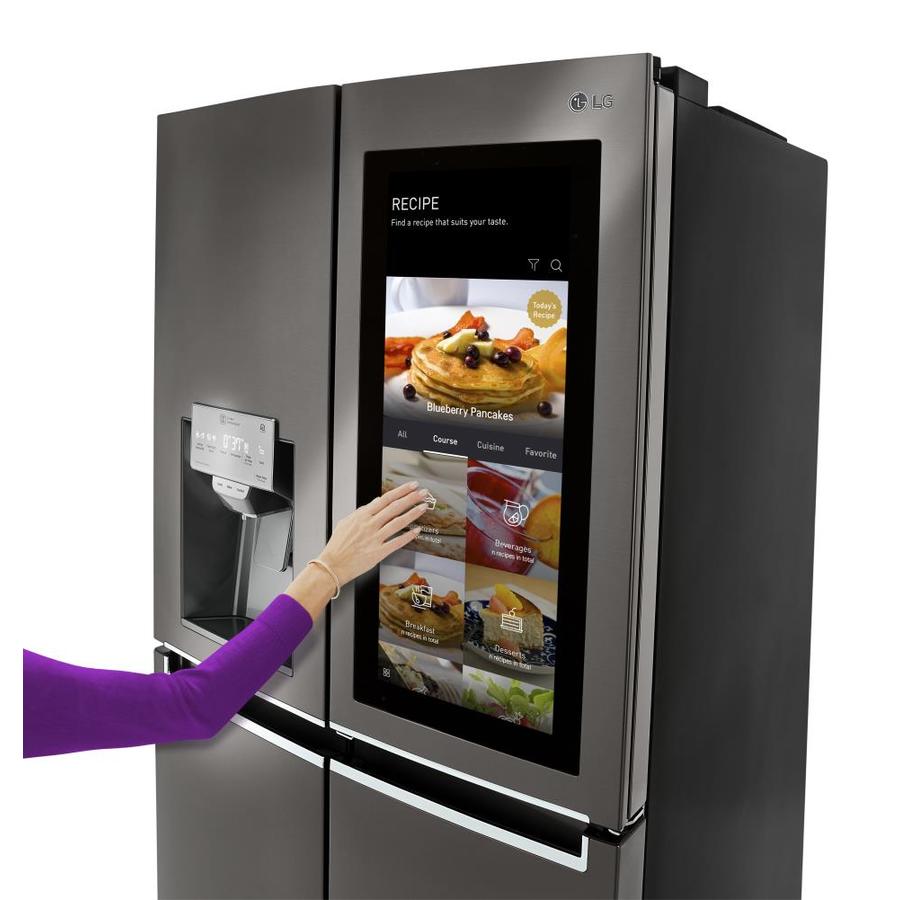
Smart refrigerators, equipped with Wi-Fi connectivity, are transforming the way we manage our kitchens. These appliances offer a range of features beyond simple food preservation, integrating seamlessly into our increasingly connected homes. From inventory management and remote temperature control to recipe suggestions and smart shopping list creation, the possibilities are expanding rapidly. This exploration delves into the capabilities, benefits, drawbacks, and future potential of these innovative devices, providing a comprehensive overview for the discerning consumer.
We will examine the various features offered by leading brands, comparing their user interfaces and overall functionality. Furthermore, we will discuss the integration of smart refrigerators with other smart home devices and explore the potential security implications and reliance on internet connectivity. Finally, we’ll look ahead to the future, considering advancements in artificial intelligence and the Internet of Things (IoT) and their impact on the evolution of smart refrigerator technology.
Smart Appliances
The smart appliance market is experiencing rapid growth, driven by increasing consumer demand for convenience, energy efficiency, and enhanced home management capabilities. This expansion encompasses a wide range of household items, transforming them from simple machines into interconnected components of a smart home ecosystem. This section explores the current landscape of smart appliances, examining their technological advancements, environmental impact, and future design possibilities.
Smart Appliance Types and Functionalities
Smart appliances are now available for virtually every area of the home. Refrigerators, as discussed previously, offer features like inventory management and internal camera views. Ovens frequently incorporate precise temperature control, pre-programmed cooking settings, and even the ability to remotely start and monitor cooking progress. Washing machines and dryers offer intelligent wash cycles optimized for fabric type and soil level, alongside remote monitoring and scheduling.
Dishwashers often include sensors to optimize water usage based on the level of soiling. Beyond these common appliances, the market also includes smart air conditioners, smart lighting, smart security systems, and even smart vacuum cleaners and robotic lawnmowers, all contributing to a more automated and efficient home.
Technological Advancements Across Smart Appliance Categories
Technological advancements across different smart appliance categories are significant. Refrigerators are increasingly incorporating advanced sensors for food freshness monitoring and waste reduction. Ovens are leveraging precise temperature control algorithms and advanced cooking methods like sous vide. Washing machines and dryers utilize sophisticated sensors and algorithms to optimize water and energy consumption, and improve cleaning effectiveness. Dishwashers are incorporating quieter operation and more efficient water spray patterns.
Overall, the common thread is the integration of sophisticated sensors, improved control algorithms, and enhanced connectivity, often through Wi-Fi or other smart home protocols. This allows for remote control, data analysis, and integration with other smart home devices.
Impact of Smart Appliances on Energy Consumption and Resource Management
The impact of smart appliances on energy consumption and resource management is a complex issue. While many smart appliances aim to reduce energy usage through features like optimized wash cycles and intelligent temperature control, the overall effect depends on several factors, including user behavior and the specific features of the appliance. For example, a smart refrigerator with efficient cooling systems can reduce energy consumption compared to older models, but leaving the door open frequently negates those benefits.
Similarly, smart washing machines can save water and energy with optimized cycles, but overusing them can offset the savings. However, the potential for data-driven optimization and remote monitoring offers significant opportunities for reducing overall household energy and water consumption, leading to a positive environmental impact in the long run. The key lies in responsible usage and the design of energy-efficient smart appliances.
Design Principles of a Hypothetical Smart Appliance: The “Universal Home Hub”
Imagine a new smart appliance, the “Universal Home Hub,” designed to integrate and manage all other smart devices within a home. This device would act as a central control unit, consolidating the interfaces of various smart appliances into a single, intuitive platform. It would feature a large touchscreen display showcasing real-time information from connected devices, such as energy consumption, appliance status, and scheduled tasks.
Advanced algorithms would analyze usage patterns to optimize energy consumption, suggesting adjustments to improve efficiency. The Hub would also incorporate advanced security features, monitoring the status of smart locks and security cameras, and providing notifications in case of unusual activity. Voice control and gesture recognition would provide seamless interaction, allowing users to manage their smart home effortlessly.
Furthermore, the Hub would learn user preferences over time, automatically adjusting settings and scheduling tasks to match individual routines, further optimizing efficiency and convenience. The device would use a secure cloud connection for data storage and remote access, allowing users to monitor and control their home from anywhere. This design emphasizes ease of use, centralized control, and intelligent automation to create a truly connected and efficient smart home.
Smart refrigerators with Wi-Fi represent a significant advancement in kitchen technology, offering convenience, efficiency, and enhanced food management. While security concerns and internet dependency are valid considerations, the benefits of streamlined organization, reduced food waste, and integration with a broader smart home ecosystem outweigh the drawbacks for many consumers. As technology continues to evolve, we can anticipate even more innovative features and seamless integration with other smart appliances, solidifying the smart refrigerator’s place as a central hub in the modern connected home.
Clarifying Questions
What happens if my Wi-Fi goes down?
Most smart refrigerators will still function as a standard refrigerator, though features requiring internet connectivity will be unavailable until the connection is restored.
Are smart refrigerators energy efficient?
Energy efficiency varies by model. Look for Energy Star ratings to ensure you’re choosing an energy-saving option. Some features, like internal cameras, might slightly increase energy consumption.
How secure is the data collected by my smart refrigerator?
Security measures vary by manufacturer. Look for refrigerators with strong encryption and reputable data security practices. Regular software updates are crucial for maintaining security.
Can I control my smart refrigerator remotely from anywhere?
Yes, most models allow for remote temperature control and other settings via a smartphone app, provided you have a stable internet connection.