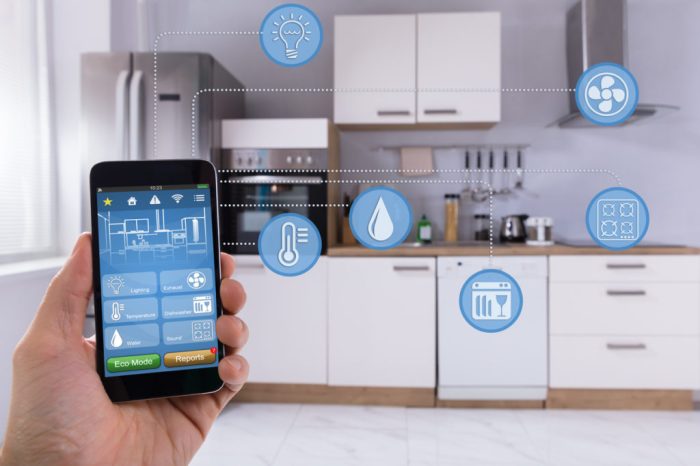
The modern home is rapidly evolving, seamlessly integrating technology into our daily lives. Smart appliances are at the forefront of this transformation, offering unprecedented convenience, efficiency, and control over our domestic environments. This exploration delves into the world of smart home devices, examining their underlying technologies, benefits, drawbacks, and future potential, ultimately painting a picture of a connected and automated future.
From smart refrigerators that manage grocery lists to intelligent thermostats optimizing energy consumption, the range of available smart appliances is vast and constantly expanding. This guide provides a detailed overview of this exciting technology, addressing common concerns and exploring the potential impact on our homes and lifestyles.
Defining Smart Appliances for the Home
Smart home appliances represent a significant advancement in home technology, offering convenience, efficiency, and enhanced control compared to their traditional counterparts. They seamlessly integrate with home networks and often interact with other smart devices, creating a more connected and automated living environment. This integration allows for remote control, automated functions, and data-driven optimization, features absent in traditional appliances.Smart appliances are distinguished from their traditional counterparts primarily by their connectivity and intelligence.
Traditional appliances perform pre-programmed functions with minimal user interaction beyond basic on/off switches and settings. Smart appliances, however, leverage embedded technology, such as Wi-Fi, Bluetooth, or other network protocols, to connect to the internet and interact with users and other devices. This connectivity enables advanced features such as remote monitoring and control, data collection for performance analysis, and integration with smart home ecosystems.
Key Features and Functionalities of Smart Appliances
Smart appliances typically incorporate a range of features that enhance their functionality and user experience. These include remote control via smartphone apps or voice assistants, allowing users to manage their appliances from anywhere with an internet connection. Many also offer scheduling capabilities, enabling automated operation based on user preferences or external factors like energy prices. Data collection and analysis provide insights into energy consumption, usage patterns, and appliance performance, promoting efficiency and proactive maintenance.
Furthermore, smart appliances often boast enhanced safety features and improved user interfaces, leading to a more intuitive and user-friendly experience. Examples of these features in action include receiving notifications when a washing machine cycle is complete or adjusting the thermostat remotely to optimize home comfort and energy efficiency.
Types of Smart Home Appliances
The market offers a wide variety of smart appliances categorized by their function within the home. The kitchen is a common area for smart appliance integration, with smart refrigerators offering inventory management and recipe suggestions, smart ovens enabling remote preheating and cooking monitoring, and smart coffee makers providing automated brewing schedules. Laundry rooms are increasingly incorporating smart washing machines and dryers, offering remote cycle control, optimized detergent usage, and diagnostics for potential issues.
Climate control is another key area, with smart thermostats learning user preferences and automatically adjusting temperatures for optimal comfort and energy savings. Beyond these, smart appliances extend to other areas like lighting, security systems, and entertainment systems, contributing to a fully integrated smart home environment.
Comparison of Smart Appliances
The following table compares five different smart appliances, highlighting their key features, benefits, and drawbacks:
| Appliance | Features | Benefits | Drawbacks |
|---|---|---|---|
| Smart Refrigerator | Inventory tracking, recipe suggestions, internal cameras, temperature monitoring | Reduced food waste, meal planning assistance, remote temperature control | High initial cost, potential for connectivity issues, reliance on internet access |
| Smart Thermostat | Remote temperature control, programmable scheduling, energy usage monitoring, learning algorithms | Energy savings, improved comfort, remote access and control | Initial investment, potential incompatibility with older HVAC systems, reliance on accurate sensors |
| Smart Washing Machine | Remote cycle control, optimized detergent usage, diagnostic alerts, automated cleaning cycles | Convenience, improved efficiency, reduced water and energy consumption | Higher cost than traditional models, reliance on internet connection for remote control |
| Smart Oven | Remote preheating and cooking control, multiple cooking modes, recipe integration | Convenience, precise cooking, enhanced cooking capabilities | Higher price point, potential for connectivity issues, dependence on smartphone app |
| Smart Lighting System | Remote control, programmable scheduling, color customization, energy monitoring | Energy savings, enhanced ambiance, increased security through automated lighting | Initial setup can be complex, reliance on internet connectivity, potential for system failures |
Technology Behind Smart Appliances
Smart appliances represent a significant leap forward in home automation, leveraging a sophisticated interplay of technologies to enhance convenience, efficiency, and energy management. Their functionality relies on a robust infrastructure encompassing communication protocols, sensor integration, and increasingly, artificial intelligence.The core technologies enabling smart appliance functionality are diverse, yet interconnected. They facilitate seamless communication between the appliance, the home network, and often, external services.
Communication Protocols
Smart appliances utilize various communication protocols to connect and exchange data. Wi-Fi is the most prevalent, offering a relatively high bandwidth connection suitable for transferring large amounts of data, such as high-resolution images from a smart refrigerator camera. Bluetooth, while offering lower bandwidth, is advantageous for shorter-range, low-power applications, such as connecting a smart scale to a smartphone.
The Internet of Things (IoT) encompasses a broader range of protocols, including Zigbee and Z-Wave, which are optimized for low-power, mesh networking within the home, ideal for controlling numerous devices with minimal energy consumption. These protocols ensure that data can be exchanged effectively between the appliance and other smart home devices or cloud services.
Sensors and Data Collection
Sensors are the crucial link between the physical world and the digital realm within smart appliances. A wide variety of sensors are employed, tailored to the specific function of the appliance. For instance, a smart washing machine might incorporate sensors to monitor water level, temperature, and the weight of the laundry, adjusting the wash cycle accordingly. Smart ovens might use temperature sensors for precise cooking and even image recognition to identify food types.
This data is then collected, processed, and often transmitted to a central hub or cloud service for analysis and further control. The data collected allows for optimization of appliance performance and often contributes to insights on energy consumption and usage patterns.
Artificial Intelligence and Machine Learning
The integration of artificial intelligence (AI) and machine learning (ML) is rapidly transforming the capabilities of smart appliances. AI algorithms allow appliances to learn user preferences and adapt their operation accordingly. For example, a smart thermostat can learn your preferred temperature settings at different times of the day and automatically adjust accordingly, minimizing energy waste. ML algorithms enable predictive maintenance, allowing appliances to anticipate potential problems and alert users before a malfunction occurs.
A smart refrigerator, using data from its internal sensors and usage patterns, might predict when you are running low on milk and suggest adding it to your grocery list. These capabilities move beyond simple automation, providing proactive and personalized functionality.
Smart Home Ecosystem Data Flow
The following flowchart illustrates a simplified representation of the data flow within a smart home ecosystem:[Imagine a flowchart here. The flowchart would start with a user interacting with a smart appliance (e.g., setting a temperature on a smart thermostat). This action would trigger data transmission via Wi-Fi or another protocol to a smart home hub (e.g., a router or a dedicated smart home controller).
The hub then processes the data and may send it to a cloud service for further analysis or storage. The cloud service may then send commands back to the appliance, or provide feedback to the user through a mobile app. Finally, the appliance would respond to the command, completing the loop. The flowchart would clearly depict data flow direction using arrows and labeled boxes representing each component: User, Smart Appliance, Smart Home Hub, Cloud Service, and feedback loops.]
Benefits and Drawbacks of Smart Appliances
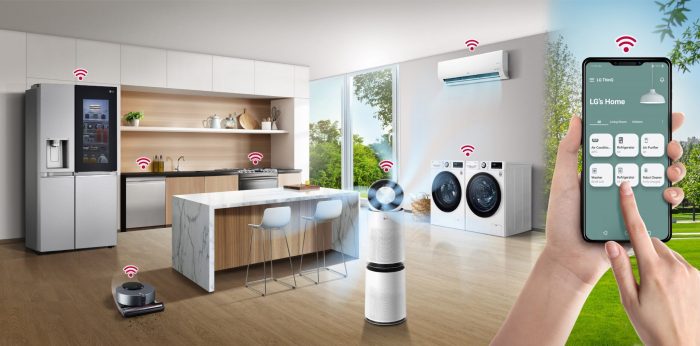
Smart appliances offer a compelling blend of convenience and efficiency, but their integration into the home environment also presents certain challenges. Understanding both the advantages and disadvantages is crucial for making informed decisions about adopting this technology. This section will explore the key benefits and drawbacks, examining their impact on energy consumption and privacy.
Advantages of Smart Appliances
Smart appliances significantly enhance the home experience in several ways. Energy efficiency is a primary benefit; many smart appliances incorporate features designed to optimize energy use, leading to lower utility bills and a reduced environmental footprint. Convenience is another major draw; features like remote control, scheduling, and automated operation streamline household tasks, freeing up time and reducing effort.
Improved security is also a considerable advantage; some smart appliances integrate with home security systems, offering enhanced monitoring and protection against intrusion. For example, smart locks can be remotely controlled, and smart cameras provide real-time surveillance. Finally, increased home automation improves overall comfort and convenience, leading to a more streamlined and efficient living environment.
Disadvantages of Smart Appliances
Despite their advantages, smart appliances also present several potential drawbacks. The initial cost of purchasing smart appliances is often higher than their traditional counterparts. Furthermore, ongoing subscription fees for cloud services or advanced features can add to the overall expense. Privacy concerns are another significant challenge; the data collected by smart appliances raises questions about data security and potential misuse.
Security vulnerabilities are a serious concern; smart appliances are susceptible to hacking, potentially compromising personal data or even physical safety. The technical complexity of setting up and maintaining smart appliances can also be daunting for some users, requiring a degree of technical proficiency or reliance on professional assistance. Finally, reliance on internet connectivity is essential for many smart appliance functionalities; outages can disrupt operations and limit the usability of these devices.
Energy Consumption Comparison
The energy consumption of smart appliances compared to traditional models varies greatly depending on the specific appliance and its features. However, many smart appliances are designed with energy efficiency in mind.
- Smart Refrigerators: Often include features like automatic defrosting and optimized cooling systems, potentially leading to lower energy consumption than older models.
- Smart Washing Machines & Dryers: May offer energy-saving cycles and intelligent load sensing, resulting in reduced energy use compared to older, less efficient models.
- Smart Thermostats: These are often the most energy-efficient option, learning user preferences and automatically adjusting temperatures to optimize energy use.
- Traditional Appliances: Older models generally lack the advanced energy-saving features found in smart appliances, resulting in higher energy consumption.
It’s important to note that while some smart appliances may consume slightly more energy due to their connected features, the overall energy savings from optimized usage often outweigh this marginal increase.
Addressing Privacy Concerns
The collection and use of personal data by smart appliances are a legitimate concern. Several solutions can help mitigate these risks.
- Strong Passwords and Two-Factor Authentication: Implementing strong, unique passwords and enabling two-factor authentication adds an extra layer of security to protect user accounts and data.
- Regular Software Updates: Keeping appliance software updated helps patch security vulnerabilities and improve overall privacy protections.
- Data Minimization: Users should only enable the data collection features that are absolutely necessary. Review and adjust privacy settings regularly.
- Independent Security Audits: Choose appliances from manufacturers who regularly undergo independent security audits to ensure their products meet high security standards.
- Encrypted Communication: Look for appliances that use end-to-end encryption to protect data transmitted between the appliance and the cloud.
Future Trends in Smart Appliances
The smart home appliance market is poised for significant growth and transformation in the coming years. Technological advancements, evolving consumer preferences, and a growing emphasis on sustainability are driving innovation and shaping the future of these devices. We can expect to see increasingly sophisticated appliances that seamlessly integrate into our lives, offering enhanced convenience, efficiency, and personalized experiences.The integration of artificial intelligence (AI) and machine learning (ML) will be a key driver of future developments.
These technologies will enable appliances to learn user habits, predict needs, and proactively optimize performance. For instance, a smart refrigerator might automatically reorder groceries based on consumption patterns, while a smart washing machine could adjust its settings based on the type and amount of laundry.
Increased AI and Machine Learning Integration
Smart appliances are already leveraging AI and ML to some degree, but future iterations will see a significant increase in their capabilities. This will lead to more personalized and proactive appliance functionality. For example, AI-powered ovens might learn your preferred cooking styles and suggest recipes based on the ingredients you have on hand. Smart washing machines could automatically adjust water temperature and cycle length based on the fabric type and level of soiling, resulting in optimized cleaning and energy efficiency.
This enhanced intelligence will make appliances more intuitive and user-friendly, requiring less manual intervention.
Advancements in Connectivity and Interoperability
Improved connectivity and interoperability between smart appliances will create a more cohesive and integrated smart home ecosystem. This will involve advancements in communication protocols like Matter, allowing different brands and types of appliances to seamlessly communicate and work together. Imagine a scenario where your smart thermostat automatically adjusts the temperature based on the occupancy detected by your smart security system, or your smart oven preheats when your smart refrigerator detects that you’ve taken out ingredients for a specific recipe.
This level of seamless integration will significantly enhance the convenience and efficiency of the smart home.
Focus on Sustainability and Energy Efficiency
As concerns about climate change and energy consumption grow, the focus on sustainability will be a defining trend in smart appliance development. Appliances will be designed with greater energy efficiency in mind, employing technologies such as advanced sensors, AI-powered optimization algorithms, and smart power management systems. For instance, smart refrigerators might employ advanced insulation and intelligent cooling systems to reduce energy consumption.
Smart washing machines could optimize water usage based on load size and soil level, minimizing both water and energy waste. This increased emphasis on sustainability will lead to more environmentally friendly and cost-effective appliances.
Personalized User Experiences and Customization
Smart appliances will become increasingly personalized and adaptable to individual user needs and preferences. This will involve the use of advanced user interfaces, voice control, and customizable settings. Appliances might learn individual user preferences through AI and ML, automatically adjusting settings to optimize performance and user experience. For example, a smart coffee maker might learn your preferred coffee strength and brewing temperature, automatically preparing your coffee exactly to your liking each morning.
This level of personalization will create a more seamless and intuitive user experience, tailoring the appliance functionality to meet individual needs.
Smart appliances are reshaping the domestic landscape, offering a blend of convenience, efficiency, and technological advancement. While challenges remain regarding privacy, security, and cost, the potential benefits are undeniable. As technology continues to evolve, we can anticipate even greater integration, automation, and personalization within our smart homes, leading to a more comfortable, sustainable, and responsive living experience. The future of home living is undeniably smart.
Essential FAQs
What is the average lifespan of a smart appliance?
The lifespan varies depending on the appliance and brand, but generally, smart appliances have a similar lifespan to their non-smart counterparts, typically 10-15 years with proper maintenance.
Are smart appliances difficult to install and use?
Most smart appliances are designed for user-friendliness. While some may require a bit of technical knowledge for initial setup, many offer intuitive interfaces and mobile app support for easy control.
How much more expensive are smart appliances compared to traditional appliances?
Smart appliances typically cost more upfront than traditional models, but the long-term savings in energy efficiency and potential convenience may offset the higher initial investment.
Can smart appliances be integrated with different home automation systems?
Many smart appliances are compatible with popular home automation systems like Amazon Alexa, Google Home, and Apple HomeKit, allowing for centralized control and integration.