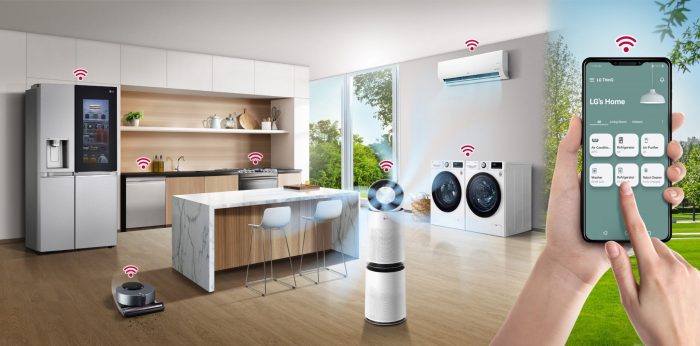
The smart home revolution continues to gain momentum, and 2024 promises a wider array of innovative appliances designed to simplify our lives and enhance our homes. From refrigerators that track inventory to ovens that preheat with a voice command, the possibilities are expanding rapidly. This guide delves into the best smart appliances of the year, exploring their features, benefits, and potential drawbacks to help you make informed decisions.
We’ll examine top contenders across various categories, comparing features, price points, and energy efficiency. Crucially, we’ll also address important considerations such as smart home integration, security concerns, and the long-term value proposition of investing in these technologically advanced devices. Our goal is to equip you with the knowledge to confidently navigate the evolving landscape of smart home technology.
Top Smart Appliances Categories for 2024
Smart appliances are rapidly evolving, offering increased convenience, energy efficiency, and home integration. This section will highlight the leading categories and their key features for 2024, focusing on refrigerators, washing machines, ovens, and dishwashers. We will explore the unique benefits each category offers and provide a comparison of their energy efficiency.
Smart Refrigerator Features and Benefits
Smart refrigerators are no longer just about keeping food cold. Many models now offer features such as in-door cameras for inventory management, interactive touchscreens for recipe access and entertainment, and automatic ordering of groceries when supplies run low. This minimizes food waste, saves time on shopping, and enhances the overall kitchen experience. The integration with smart home ecosystems allows for remote temperature control and diagnostics, providing greater convenience and peace of mind.
Smart Washing Machine Features and Benefits
Smart washing machines offer significant advancements in cleaning efficiency and convenience. Features like intelligent load sensing, automatic detergent dispensing, and remote cycle control optimize wash cycles based on the type and amount of laundry. Some models also offer steam cleaning for improved stain removal and sanitization, as well as features that allow for remote monitoring of the washing cycle progress.
This contributes to water and energy conservation and ensures optimal cleaning results.
Smart Oven Features and Benefits
Smart ovens are transforming the way we cook, offering precise temperature control, pre-programmed cooking settings, and even the ability to remotely monitor and control the cooking process. Many models offer features like self-cleaning functions, guided cooking instructions, and connectivity with smart home assistants for voice control. The enhanced precision and convenience offered by smart ovens contribute to improved cooking outcomes and a more efficient cooking process.
Smart Dishwasher Features and Benefits
Smart dishwashers focus on improving cleaning performance and convenience. Features such as automatic cycle selection, remote start and stop capabilities, and intelligent sensors to optimize water usage are common. Some models offer advanced cleaning technologies like zone cleaning for targeted cleaning of heavily soiled items and improved drying performance. These features contribute to energy savings, efficient cleaning, and improved convenience.
Smart Appliance Comparison Table
| Feature | Smart Refrigerator | Smart Washing Machine | Smart Oven | Smart Dishwasher |
|---|---|---|---|---|
| Key Features | In-door cameras, touchscreen displays, smart inventory management, automatic ordering | Intelligent load sensing, automatic detergent dispensing, steam cleaning, remote cycle control | Precise temperature control, pre-programmed settings, self-cleaning, remote monitoring | Automatic cycle selection, remote start/stop, zone cleaning, improved drying |
| Price Range (USD) | $1500 – $5000+ | $800 – $2500+ | $1000 – $4000+ | $800 – $2000+ |
| Brand Examples | Samsung, LG, KitchenAid, GE | Whirlpool, LG, Samsung, Maytag | Samsung, LG, GE, Bosch | Bosch, KitchenAid, LG, Samsung |
Smart Appliance Energy Efficiency Comparison
Energy efficiency is a crucial factor when considering smart appliances. While specific ratings vary by model and manufacturer, top-tier smart appliances generally boast Energy Star certifications, indicating high energy efficiency. For example, many top-rated smart refrigerators utilize inverter compressors and advanced insulation to minimize energy consumption. Similarly, smart washing machines often incorporate features like variable speed motors and optimized water usage settings to reduce energy and water waste.
Smart ovens with precise temperature control minimize energy use by reducing preheating times and preventing overcooking. Finally, smart dishwashers use intelligent sensors to optimize water usage based on the load size, reducing overall energy and water consumption. Comparing energy efficiency ratings (like Energy Star ratings) from different brands and models is crucial for making informed purchasing decisions.
Consumers should check the EnergyGuide label on appliances to compare models effectively.
Smart Home Integration and Compatibility

Seamless integration of smart appliances is crucial for maximizing their benefits. A well-connected smart home simplifies daily life, offering centralized control and automation, but only if your appliances play nicely together. This requires careful consideration of compatibility across different smart home ecosystems and brands.The success of a smart home hinges on the interoperability of its components. A fragmented system, where appliances from different manufacturers refuse to communicate, renders the “smart” aspect largely ineffective.
Imagine trying to control your smart lights, thermostat, and washing machine through separate, incompatible apps – the inconvenience quickly overshadows the benefits. A unified, smoothly functioning system, however, offers significant improvements in convenience, energy efficiency, and overall home management.
Leading Smart Home Platforms and Appliance Compatibility
Several leading smart home platforms provide the backbone for appliance integration. These platforms act as central hubs, allowing users to manage multiple devices from various manufacturers through a single interface. Amazon Alexa and Google Home are dominant players, boasting extensive compatibility with a wide range of appliances, including those from Samsung SmartThings, LG ThinQ, and Whirlpool. Apple HomeKit offers a more closed ecosystem, focusing primarily on Apple devices and compatible appliances.
Each platform employs unique protocols and standards, impacting the range of supported devices. For example, a smart refrigerator from Samsung might seamlessly integrate with Samsung SmartThings and Google Home, but may have limited or no compatibility with Apple HomeKit. The extent of compatibility varies significantly between platforms and brands, necessitating careful research before purchasing appliances.
Smart Home App User Interfaces and Functionalities
The user experience is significantly impacted by the design and functionality of each smart home app. Amazon Alexa and Google Home apps, for instance, provide intuitive interfaces with voice control capabilities. These apps typically offer a dashboard view of all connected devices, enabling users to monitor their status, adjust settings, and create automation routines. Samsung SmartThings provides a more detailed view of device settings and data, while Apple HomeKit emphasizes simplicity and ease of use, prioritizing a clean and minimal interface.
Differences exist in the level of customization, automation options, and the availability of advanced features like geofencing and energy monitoring. For example, some apps offer more sophisticated scene creation capabilities than others, allowing for complex automation sequences triggered by specific events or time schedules. The choice of a smart home platform often depends on individual preferences regarding user interface design, the desired level of control, and the range of supported features.
Smart Appliance Features and Functionality
Smart appliances offer a range of features designed to improve convenience, efficiency, and overall user experience. These features go beyond basic functionality, integrating technology to streamline household tasks and provide valuable insights into energy consumption and appliance performance. Understanding these features and their implications is crucial for making informed decisions when purchasing smart appliances.
The most desirable features often revolve around convenience, control, and energy efficiency. Many features complement each other, creating a synergistic effect that significantly enhances the user experience. However, it’s also important to be aware of potential limitations to avoid unrealistic expectations.
Voice Control
Voice control allows users to operate appliances using voice commands, typically through smart home assistants like Amazon Alexa or Google Assistant. This hands-free operation is particularly useful when multitasking or when your hands are occupied. For example, you can start a washing machine cycle, adjust the oven temperature, or turn off a smart light simply by speaking a command.
While incredibly convenient, voice control relies on a stable internet connection and the accuracy of voice recognition technology, which can be affected by background noise or accents.
Remote Monitoring
Remote monitoring capabilities enable users to check the status of their appliances from anywhere with an internet connection. This is particularly useful for appliances like refrigerators, which allow users to check food inventory remotely, or ovens, which permit checking on cooking progress while away from home. Through dedicated apps, users can often receive notifications about appliance malfunctions or maintenance alerts.
However, the constant connectivity required for remote monitoring can raise concerns about data privacy and security, necessitating careful consideration of the manufacturer’s data handling policies.
Automated Scheduling
Automated scheduling allows users to pre-program appliances to operate at specific times. This is beneficial for tasks like starting a dishwasher overnight, running a washing machine during off-peak energy hours, or preheating an oven before arriving home. This feature not only saves time and effort but also contributes to energy efficiency by optimizing appliance usage. The potential drawback is the reliance on accurate scheduling and potential conflicts with other household routines if not properly managed.
For instance, if you forget to adjust the schedule after a change in your daily routine, you might find yourself with a delayed washing cycle or a cold meal.
Smart Energy Management
Many smart appliances incorporate features to monitor and manage energy consumption. This often includes providing detailed reports on energy usage, identifying areas for improvement, and even suggesting ways to reduce energy waste. Some appliances can automatically adjust settings to optimize energy use, further reducing utility bills. While beneficial for environmental consciousness and cost savings, the accuracy of energy monitoring can vary depending on the appliance and the quality of its sensors.
Furthermore, the data collected might raise privacy concerns, depending on the manufacturer’s data policies.
Connectivity and Integration
Smart appliances are designed to integrate with other smart home devices and systems. This interoperability enables seamless control and automation across multiple appliances and devices. For instance, a smart oven might automatically notify a smart lighting system to turn on the kitchen lights when the cooking cycle is complete. However, compatibility issues can arise due to the use of different smart home protocols and standards by various manufacturers.
This can lead to difficulties in establishing seamless integration across a diverse range of smart home devices.
Cost and Value of Smart Appliances
The initial investment in smart appliances can seem daunting, but understanding the long-term cost-benefit analysis reveals a compelling case for their adoption. While upfront costs vary significantly depending on the appliance and its features, the potential for energy savings, increased convenience, and time efficiency can ultimately outweigh the initial expense. This section explores the price range of smart appliances and analyzes their long-term value proposition.Smart appliances span a wide price spectrum.
A basic smart plug, for instance, might cost around $15-$30, while a high-end smart refrigerator with advanced features could easily exceed $3000. Similarly, a smart thermostat can range from $100 to $300, and smart washing machines can fall anywhere between $800 and $1500. These price differences often reflect the sophistication of features, brand reputation, and overall build quality.
A mid-range smart oven, for example, might cost between $500 and $1000, offering a balance between functionality and price.
Price Points Across Appliance Categories
The cost of a smart appliance is influenced by several factors including brand, features, and size. A basic smart light bulb might cost $10-$20, whereas a sophisticated smart lighting system for an entire home could run into thousands. Smart microwaves typically range from $150-$400, while smart dishwashers can cost anywhere from $800-$2000 depending on capacity and features. High-end smart ovens with advanced cooking capabilities and smart displays can cost well over $1500.
These variations highlight the importance of careful consideration of needs and budget before purchasing.
Long-Term Cost Savings Through Energy Efficiency
Many smart appliances boast energy-saving features. Smart thermostats, for example, learn your heating and cooling preferences, optimizing energy usage and potentially reducing your monthly bills by 10-15% or more. Smart refrigerators with advanced sensors monitor internal temperature and adjust accordingly, preventing energy waste. Similarly, smart washing machines often offer energy-efficient cycles, reducing water and electricity consumption. These long-term savings can accumulate significantly over the lifespan of the appliance, offsetting the higher initial purchase price.
For example, a family saving $50 per month on energy costs would recoup the cost of a $600 smart thermostat in just one year.
Improved Convenience and Time Savings
Beyond energy efficiency, smart appliances offer significant convenience and time-saving benefits. Features like remote control allow you to preheat your oven while still at work or start your washing machine from your phone. Smart refrigerators can alert you to expiring food items, reducing food waste and saving grocery shopping trips. Smart ovens with built-in recipe guidance simplify cooking and reduce preparation time.
These features contribute to a more streamlined and efficient household management, freeing up valuable time and reducing stress. For instance, the ability to remotely monitor and adjust your home’s temperature eliminates the need for manual adjustments, saving time and ensuring optimal comfort levels.
Security and Privacy Concerns with Smart Appliances
The increasing connectivity of our homes through smart appliances presents a compelling trade-off: convenience versus security and privacy. While smart appliances offer unparalleled control and efficiency, they also introduce potential vulnerabilities that malicious actors could exploit. Understanding these risks and implementing appropriate safeguards is crucial for protecting personal data and maintaining a secure home environment.The interconnected nature of smart appliances creates several security risks.
These devices often communicate with each other and a central hub, such as a smartphone or smart home system, via Wi-Fi or other networks. This creates multiple points of potential entry for hackers. For example, a compromised smart refrigerator could potentially serve as a gateway to access other devices on your home network, leading to data breaches or even control over other smart home systems.
Furthermore, the data collected by these appliances, such as usage patterns and personal preferences, can be valuable to cybercriminals for targeted advertising or even identity theft.
Security Vulnerabilities in Smart Appliances
Smart appliances, like other internet-connected devices, are susceptible to various security vulnerabilities. These include weak default passwords, inadequate encryption, and software vulnerabilities that hackers can exploit to gain unauthorized access. A poorly secured smart appliance might allow remote access to its functions, enabling a hacker to control the device remotely. This could range from inconveniences like turning a smart oven on and off to more serious consequences such as manipulating a smart lock or accessing sensitive data stored on a smart TV.
Furthermore, some appliances may lack robust security protocols, making them vulnerable to denial-of-service attacks, which can disrupt their functionality. Examples of real-world vulnerabilities include instances where researchers have demonstrated the ability to remotely control smart locks and manipulate smart thermostats. These incidents highlight the critical need for manufacturers to prioritize security in the design and development of smart appliances.
Securing Smart Appliances and Protecting User Data
Protecting your smart appliances and the data they collect requires a multi-faceted approach. First and foremost, change default passwords immediately upon installation to strong, unique passwords that are not used for other accounts. Consider using a password manager to generate and securely store complex passwords. Regularly update the firmware of your smart appliances. These updates often include security patches that address known vulnerabilities.
Manufacturers usually provide notifications about these updates; however, it’s essential to proactively check for them. Additionally, use strong Wi-Fi passwords and enable network security features like WPA2 or WPA3 encryption to protect your home network from unauthorized access. Limit the number of devices connected to your home network to minimize the attack surface. Finally, carefully review the privacy policies of the manufacturers of your smart appliances to understand what data they collect and how it is used.
The Importance of Strong Passwords and Regular Software Updates
Strong passwords and regular software updates are cornerstones of smart appliance security. Weak passwords are easily guessed or cracked, providing a simple entry point for hackers. A strong password is long, complex, and includes a mix of uppercase and lowercase letters, numbers, and symbols. Regular software updates are crucial because they address vulnerabilities that hackers might exploit.
Outdated software often contains known security flaws that manufacturers have since patched. Failing to update leaves your smart appliances vulnerable to attacks. Manufacturers frequently release updates to improve security and add new features, making regular updates a critical aspect of maintaining a secure smart home environment. The impact of neglecting these essential security practices can range from minor inconveniences to significant security breaches, highlighting the importance of adopting proactive security measures.
Future Trends in Smart Appliances
The landscape of smart appliances is rapidly evolving, driven by advancements in artificial intelligence, the Internet of Things (IoT), and other emerging technologies. These innovations are not only enhancing convenience and efficiency but also fundamentally reshaping how we interact with our homes and the appliances within them. We can expect significant changes in functionality, connectivity, and overall user experience in the coming years.The integration of increasingly sophisticated AI and machine learning algorithms will be a defining characteristic of future smart appliances.
This will move beyond simple automation to predictive capabilities and personalized functionality.
AI-Powered Predictive Maintenance and Optimization
Smart appliances will leverage AI to predict potential malfunctions and schedule preventative maintenance before problems arise. For example, a smart refrigerator could analyze its internal temperature fluctuations and compressor activity to anticipate a potential compressor failure, alerting the user and potentially contacting a repair service proactively. This predictive maintenance will extend to other appliances, optimizing energy consumption and extending their lifespan.
Machine learning algorithms will analyze usage patterns to adjust settings for optimal performance and energy efficiency, leading to cost savings for consumers. Imagine a smart washing machine that learns your preferred wash cycles and automatically adjusts water and detergent usage based on the type and amount of laundry.
Enhanced Connectivity and Seamless Home Integration
The future of smart appliances will involve more seamless integration with other smart home devices and ecosystems. This means more sophisticated interoperability between different brands and platforms, allowing for centralized control and management through a single interface or voice assistant. We can expect advancements in mesh networking technologies to improve reliability and range, ensuring consistent connectivity even in larger homes.
This increased connectivity will enable advanced features such as coordinated operation between appliances – for instance, a smart oven preheating automatically when the smart refrigerator detects ingredients for a specific recipe have been placed inside.
Increased Personalization and User Customization
Future smart appliances will offer increasingly personalized experiences tailored to individual user preferences and needs. This could involve AI-driven customization of settings, such as adjusting the temperature of a smart thermostat based on individual user preferences or automatically adjusting the coffee brewing process based on past selections. Advanced voice recognition and natural language processing will make interacting with appliances more intuitive and personalized, allowing users to control their appliances with simple voice commands and receive customized feedback.
For example, a smart oven might provide tailored cooking instructions based on the specific recipe being prepared.
Improved Security and Privacy Features
As smart appliances become more interconnected, security and privacy concerns will remain paramount. We can anticipate advancements in encryption technologies and enhanced authentication protocols to protect user data and prevent unauthorized access. Manufacturers will likely incorporate more robust security features, such as end-to-end encryption and multi-factor authentication, to safeguard user privacy and prevent data breaches. Greater transparency regarding data collection practices and improved user control over data sharing will also be crucial.
For instance, users may have granular control over which data is shared with third-party services or manufacturers.
Ultimately, choosing the right smart appliances depends on individual needs, budget, and desired level of home automation. While the initial investment might seem significant, the long-term benefits—increased convenience, energy savings, and enhanced home security—often outweigh the costs. By carefully considering the factors discussed in this guide, you can select appliances that seamlessly integrate into your lifestyle and elevate your home experience.
Embrace the future of home technology and enjoy the benefits of a smarter, more connected home.
Clarifying Questions
What is the average lifespan of a smart appliance?
The lifespan varies by brand and appliance type, but generally, you can expect a similar lifespan to traditional appliances—around 10-15 years with proper maintenance.
Do smart appliances require a constant internet connection?
Most smart appliances require a Wi-Fi connection for full functionality, although some features may still work offline.
How much does it cost to install smart appliances?
Installation costs vary greatly depending on the appliance and whether professional installation is required. Some appliances are easily self-installed, while others might need a qualified technician.
Are smart appliances difficult to use?
Many smart appliances have intuitive interfaces and user-friendly apps. However, some might have a steeper learning curve depending on the features and technology involved.


