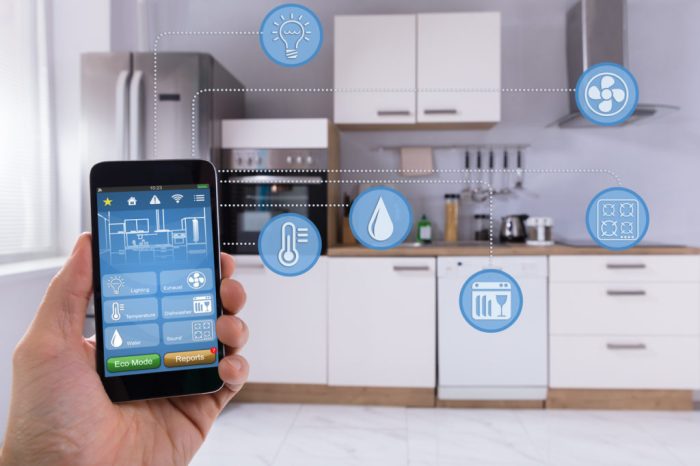
Imagine a home where your appliances anticipate your needs, adjusting temperatures, starting cycles, and even ordering groceries based on your usage patterns. This isn’t science fiction; it’s the reality of smart appliances. These interconnected devices offer convenience, efficiency, and a level of control previously unimaginable, transforming how we interact with our homes and the technology within them. This exploration delves into the definition, functionality, benefits, and future of these increasingly prevalent household items.
From refrigerators that track inventory to washing machines that optimize their cycles based on fabric type, the possibilities are vast and constantly evolving. Understanding the technology behind smart appliances, their integration into a smart home ecosystem, and the associated benefits and drawbacks is crucial for making informed decisions about integrating them into your own living space.
Defining Smart Appliances
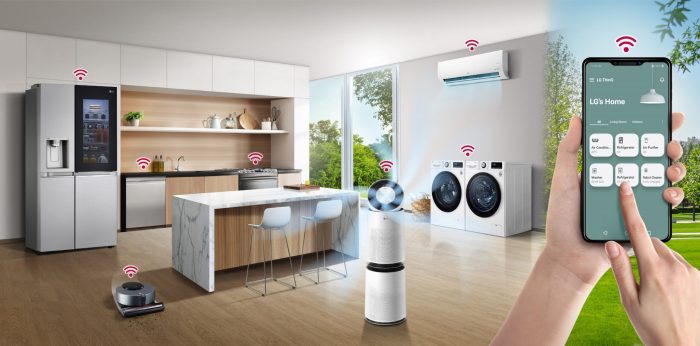
Smart appliances represent a significant advancement in home technology, seamlessly blending convenience, efficiency, and connectivity into everyday household items. They are essentially traditional appliances enhanced with embedded computer processors, sensors, and connectivity features, allowing them to perform tasks beyond their basic functions and interact with other devices within a smart home ecosystem.Smart appliances are differentiated from their traditional counterparts primarily through their enhanced functionality and connectivity.
While a traditional refrigerator simply cools food, a smart refrigerator can monitor internal temperatures, alert you to expiring items, and even suggest recipes based on available ingredients. This enhanced functionality stems from the integration of various technologies that allow for remote control, data monitoring, and automated operation. The key difference lies in their ability to connect to a network, allowing for remote access and control, data analysis, and integration with other smart home devices.
Smart Home Technologies in Smart Appliances
The capabilities of smart appliances are largely determined by the integration of various smart home technologies. These technologies work in concert to provide the enhanced functionality and user experience. For example, Wi-Fi connectivity is fundamental, enabling communication with smartphones, tablets, and other smart home hubs. This allows for remote control and monitoring of appliance settings. Bluetooth technology often facilitates local communication between the appliance and other nearby devices, such as smart speakers or sensors.
Cloud connectivity enables data storage and processing, facilitating features like recipe suggestions or energy usage tracking. Some smart appliances utilize voice assistants, such as Amazon Alexa or Google Assistant, allowing users to control the appliance using voice commands. Other integrated technologies might include sensors for monitoring temperature, humidity, or even the weight of items inside a smart appliance.
Finally, many smart appliances leverage machine learning algorithms to learn user habits and optimize their performance, such as adjusting cooling settings based on typical usage patterns.
Types of Smart Appliances
Smart appliances are transforming our homes, offering convenience, efficiency, and enhanced control over various household tasks. These devices connect to the internet, allowing for remote operation, automated functions, and integration with other smart home systems. This section explores the diverse range of smart appliances available, categorized by their function and highlighting key features and benefits.
Categorization of Smart Appliances by Type
The following table provides a structured overview of different types of smart appliances, their key features, associated benefits, and illustrative examples. This categorization helps to understand the breadth of smart technology impacting modern homes.
| Appliance Type | Key Features | Benefits | Examples |
|---|---|---|---|
| Kitchen Appliances | Remote control, automated cooking functions, recipe integration, ingredient tracking, voice control | Improved cooking efficiency, reduced food waste, enhanced culinary experience, convenient scheduling | Smart ovens (e.g., Samsung Smart Oven), smart refrigerators (e.g., LG InstaView), smart coffee makers (e.g., Smarter Coffee), smart slow cookers (e.g., Crock-Pot Connect) |
| Laundry Appliances | Remote monitoring, automated cycles, intelligent detergent dispensing, smart diagnostics | Optimized laundry processes, reduced energy and water consumption, improved appliance maintenance, convenient scheduling | Smart washing machines (e.g., Samsung AddWash), smart dryers (e.g., LG ThinQ), smart laundry detergent dispensers (various brands offer smart features integrated or as add-ons) |
| Climate Control Appliances | Remote temperature control, automated scheduling, energy-efficient operation, smart home integration | Enhanced comfort, optimized energy usage, improved home security (through remote monitoring), personalized climate settings | Smart thermostats (e.g., Nest Learning Thermostat, ecobee SmartThermostat), smart air conditioners (various brands offer smart features), smart humidifiers and dehumidifiers (e.g., Honeywell Smart Home Humidifier) |
| Security Appliances | Remote monitoring, motion detection, integrated security systems, smart locks | Enhanced home security, remote access and control, improved safety and peace of mind, automated alerts and notifications | Smart security cameras (e.g., Ring, Arlo), smart door locks (e.g., August Smart Lock, Schlage Encode), smart smoke detectors (e.g., Nest Protect), smart security systems (e.g., SimpliSafe) |
Emerging Trends in Smart Appliance Technology
The field of smart appliances is constantly evolving. Several key trends are shaping the future of this technology, focusing on improved integration, enhanced user experience, and increased efficiency.The integration of artificial intelligence (AI) is a prominent trend. AI-powered appliances learn user preferences and adapt their functions accordingly, optimizing performance and energy consumption. For example, a smart refrigerator might predict when you’re running low on milk and automatically add it to your grocery list.
Another emerging trend is the increasing use of voice assistants for controlling smart appliances. This hands-free control enhances convenience and accessibility, especially for users with mobility limitations. Furthermore, improved connectivity and interoperability are allowing for seamless integration between different smart appliances and other smart home devices, creating a truly connected and automated home environment. For instance, a smart oven could communicate with a smart refrigerator to suggest recipes based on available ingredients.
Finally, greater emphasis is being placed on energy efficiency and sustainability. Smart appliances are increasingly designed to minimize energy and water consumption, contributing to a more environmentally friendly lifestyle. Smart thermostats that learn your schedule and adjust accordingly are a prime example of this trend.
Smart appliances represent a significant shift in home technology, offering increased convenience, efficiency, and control. While security concerns and initial investment costs are factors to consider, the potential for enhanced home management and a more streamlined lifestyle is undeniable. As technology continues to advance, we can anticipate even more innovative features and seamless integration, further blurring the lines between our homes and the digital world.
The future of smart appliances is bright, promising a more connected, responsive, and ultimately, smarter home experience.
Frequently Asked Questions
What is the average lifespan of a smart appliance?
The lifespan varies depending on the appliance and brand, but generally, they last as long as, or slightly longer than, traditional appliances. Proper maintenance is key.
Are smart appliances more expensive to repair?
Repair costs can be higher due to specialized components and potentially higher labor costs for technicians familiar with the technology. Warranties are important to consider.
Do smart appliances require a strong internet connection?
Most smart appliances require a reliable Wi-Fi connection for optimal functionality. However, some may use other protocols like Bluetooth for local control.
Can smart appliances be used without a smartphone app?
Some offer basic functionality through physical controls, but many rely heavily on app integration for full control and advanced features.